
MNHMT-2027
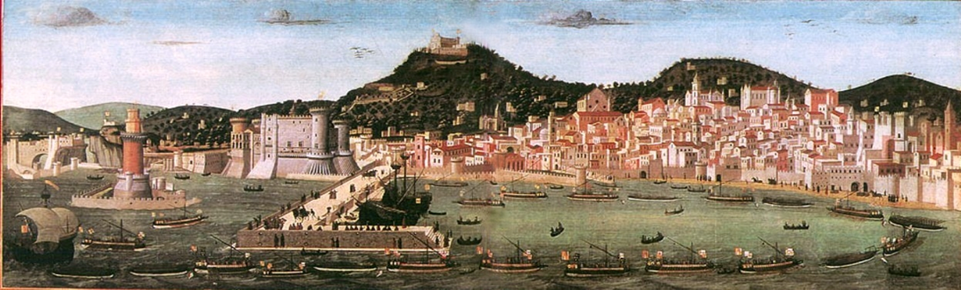
The 8th Micro/Nanoscale Heat & Mass Transfer International Conference (MNHMT2027) is set to be held in Napoli, Italy, from January 9-11, 2027. This event, in honor of Professor Chang-Lin Tien (1935-2002), continues the previous well-attended conferences held in Tainan (January 2008), Shanghai (December 2009), Atlanta (2012), Hong Kong (2013), Singapore (2016), Dalian (2019), and Nottingham (2024).
CONFERENCE OBJECTIVE
Research and education on micro/nanoscale heat and mass transfer have advanced rapidly over the last three decades through many dedicated individuals and team efforts, with direct impact now extending into various fields in science, engineering, and technology.
The conference is intended to provide a forum for researchers, educators and practitioners around the world to exchange ideas on the state-of-the-art research and development and identify future research needs in this interdisciplinary field. The conference will include keynote and invited presentations, contributed oral and poster presentations, as well as panel discussions on the current status and future opportunities, and many networking opportunities.
CONFERENCE TOPICS
-Micro/Nanofluidics and Lab-On-A-Chip
-Nanofluids
-Micro/Nanoscale Interfacial Transport Phenomena
-Nano/Microscale Boiling and Condensation Heat Transfer
-Micro/Nanoscale Thermal Radiation
-Micro/Nanoscale Energy Devices and Systems
-Micro/Nano-Thermal Manufacturing and Materials Processing
-Micro/Nanoscale Heat Conduction
-Computational Methods in Micro/ Nanoscale Transport
-Heat and Mass Transfer in Small Scale
-Micro/Miniature Two-Phase Devices/ Systems
-Biomedical Applications of Micro/ Nanoscale Transport
-Visualization of Heat and Mass Transfer in Micro/Nanoscale
-Measurement Techniques and Thermophysical Properties in
Micro/Nanoscale
-Machine Learning and AI in Nano/Micro Heat and Mass Transfer
-Poster Presentations
Conference Chairs
General Chair:
Professor Yogesh Jaluria
Mechanical Engineering Department, Rutgers University
Email: jaluria@soe.rutgers.edu
Program Co-Chairs:
Professor Nicola Bianco
Università degli Studi di Napoli Federico II
Email: nicola.bianco@unina.it
Professor Oronzio Manca
Università degli Studi della Campania «Luigi Vanvitelli»
Email: oronzio.manca@unicampania.it
Plenary Speakers
PAMELA M. NORRIS
College of Engineering University of Delaware
Decades of Research Toward Phonon Engineering
Pamela M. Norris
This presentation will highlight progress towards the goal of phonon engineering. From my first introduction to phonons in the laboratory of Chang-Lin Tien during my postdoctoral studies at Berkeley in 1993 to establishment of the Microscale Heat Transfer Laboratory at University of Virginia, my students and I have been working towards this goal.
The ability to predict, understand, and control thermal transport in materials and at interfaces remains a critical challenge and goal of nanoscale thermal transport research. In my laboratory we approached this problem experimentally, measuring nanoscale systems with time-domain thermoreflectance (TDTR), computationaly, tracking atomic thermal motion in non-equilibrium molecular dynamics simulations, and with modeling using non-equilibrium Green’s functions.
I’ll summarize our work which has combined both computational and experimental techniques to model, measure, and predict phonon dynamics, and the resulting thermal properties, for a wide range technologically relevant systems.
Short Bio
Pamela M. Norris is Dean of the College of Engineering and Professor of Mechanical Engineering at the University of Delaware. She previously served as Professor and Vice Provost for Research at George Washington University and held multiple leadership roles at the University of Virginia, including Executive Dean of Engineering and Frederick Tracy Morse Professor.
She earned her Ph.D., M.S., and B.S. in Mechanical Engineering from Georgia Tech and Old Dominion University. Her research focuses on nano-, micro-, and macroscale thermal sciences, with over 116 refereed publications, >9,200 citations, and an h-index of 52. She has led more than 50 sponsored research projects funded by NSF, DOD, NIH, and industry.
Dr. Norris is Editor-in-Chief of Nanoscale and Microscale Thermophysical Engineering and holds multiple U.S. patents. Her honors include ASME Honorary Member, Fellow of ASME and ASTFE, and election to the National Academy of Inventors. She is internationally recognized for her contributions to thermal engineering, innovation, and leadership in advancing diversity in STEM.
M. PINAR MENGÜÇ
CEEE/EÇEM, Özyeğin University, Istanbul, Türkiye
Radiative Transfer and Light–Matter Interactions: From Particle Diagnostics to Micro/Nanoscale Engineering
M.Pınar Mengüç
Radiative transfer is one of the fundamental theoretical foundations for describing energy exchange in participating and complex media. Its impact depends not only on its intricate integro-differential transport characteristics, but also on its role in the detailed understanding of light–matter interactions.
In this plenary lecture, I discuss how our work on radiative transfer and light scattering has extended toward the analysis of complex and coupled phenomena in micro- and nanoscale systems within a unified framework based on the Boltzmann transport equation, where electromagnetic waves, phonons, polaritons, plasmons, and electrons are treated as interacting energy carriers. At smaller scales, energy localization and strong coupling dominate; therefore, radiative effects must be treated together with diffusive and interfacial transport to analyze and design nanoscale systems. Depending on the carrier and scale, complementary methodologies are required to establish appropriate closure conditions.
Within this framework, developments in coupled transport modeling for nanoscale machining and in optical diagnostics, including polarized light scattering and radiative cooling systems, are discussed as representative extensions of the transport approach, together with examples from our broader research efforts and selected impactful studies from the literature.
Short Bio
M.Pınar Mengüç received his PhD in Mechanical Engineering from Purdue University (USA) in 1985. He joined the University of Kentucky the same year and became a full professor in 1993, later holding the Engineering Alumni Association Chair Professorship.
Since 2009, he has been at Özyeğin University, Istanbul, where he founded the Center for Energy, Environment and Economy (CEEE/EÇEM) and currently serves as its director and FYE Endowed Chair Professor in Engineering. His research focuses on radiative transfer, light–matter interactions, and multiscale transport phenomena, with applications in sustainable energy systems and micro/nanoscale engineering.
He is a Fellow of ASME and ICHMT and a member of the Science Academy of Türkiye, where he served on the Executive Committee (2018–2024). He also served as Editor-in-Chief of the Journal of Quantitative Spectroscopy and Radiative Transfer (2006–2024). His honors include the ASME Heat Transfer Memorial Award (2018), the Purdue Outstanding Mechanical Engineer Award (2020), the Elsevier Michael I. Mishchenko Medal (2023), and the METU Parlar Foundation Honor Award (2024).
PEI-XUE JIANG
Department of Energy and Power Engineering, Tsinghua University, Beijing 100084, China
Micro/Nanoscale Transport Phenomena and Its Enhancement: From Fundamental Mechanisms to Engineering Applications
Pei-Xue Jiang, Rui-Na Xu, Hao-Wei Lu, Ke-Cheng Zeng and Yu-Li Cao
Micro/nano-channel transport is essential for diverse engineering applications, yet accurate prediction and enhancement remain central challenges.
Based on innovative methods, our research group has conducted a series of cutting-edge and in-depth research on classical questions, from physical phenomena to hidden mechanism. We developed a first-principles direct surface calculation method to obtain precise surface interaction potentials. This enables the determination of film thickness and near-wall viscosity, overcoming the failure of classical continuum assumptions at the nanoscale. Systematic quantitative experimental investigations revealed transport deviations from macroscopic behavior for multiphase, multicomponent fluids.
The flow and heat transfer of supercritical-pressure CO₂ within microchannels exhibit complex characteristics, the complex coupling mechanism of turbulent structures, heat and mass transfer, and buoyancy/thermal acceleration effects poses significant challenges for the prediction and regulation of flow and heat transfer. Through experiments, direct numerical simulation (DNS), and machine learning (ML), the flow and heat transfer mechanisms and laws of supercritical pressure fluids have been thoroughly revealed. Highly accurate prediction and ultra-intense control methods have been developed and successfully applied to heat exchangers in solar supercritical CO₂ power generation systems.
By combining 2c-PLIF and micro-PIV optical methods, we obtain high resolution simultaneous measurement results of the internal velocity and temperature fields of the droplet, during the classical physical process of droplet impacting on a smooth hot surface. These results describe the microscopic flow and heat transfer characteristics for various droplet boiling regimes, thus providing inspiration for us to regulate the fluid behavior at the fluid-solid interface through surface micro/nanoengineering. It is experimentally witnessed that spray cooling heat transfer rate of the modified aluminum-lithium alloy is greatly enhanced, with critical heat flux increased by 130%.
We developed a robotic-AI framework integrating a robotic experimental microfluidics system with cross-scale predictive methods. By automating data synthesis, this paradigm enables multiphase flow predictions spanning six orders of magnitude. This approach achieves unprecedented acceleration, reconciling pore-scale dynamics with macroscopic predictive power for complex transport in porous media.
Short Bio
Professor Jiang Peixue, Academician of the Chinese Academy of Sciences, is the expert in engineering thermophysics. He is the Vice Chancellor of Tsinghua University Council. He also serves as Member of the 9th Academic Degrees Committee of the State Council, the Chairman of China Energy Conservation Association, Vice president of Association of Chinese Graduate Education, Director of Heat and Mass Transfer Society of China, and Vice president of Beijing Association for Science and Technology. Formerly served as Vice President of Tsinghua University. He has been engaged in the research of heat and mass transfer theory and technology under extreme conditions in the fields of low-carbon energy and power engineering. He has been honored with The Second Prize of the National Natural Science Award, The Second Prize of the National Technological Invention Award, Prize for Scientific and Technological Progress by the Ho Leung Ho Lee Foundation, and the National Advanced Worker, among others.
Keynote Speakers
ANTONIO BARLETTA
Department of Industrial Engineering, Alma Mater Studiorum Università di Bologna, Italy
Anomaly of Darcy-Bénard convection with anomalous mass diffusion
Antonio Barletta
Anomalous diffusion is the departure from the standard picture of mass transfer in a fluid saturated porous layer where, at a microscopic level, the mean-squared displacement of the diffusing molecules grows linearly in time [1, 2]. A possible model of the anomalous mass diffusion is through a time-dependent mass diffusivity coefficient [1], while other models are based on the use of fractional time-derivative or Laplacian [2]. If one focusses on a time-dependent mass diffusivity, one may have subdiffusive, standard or superdiffusive molecular transport, depending on how mass the diffusivity coefficient changes at large times. Thus, different phenomenologies are expected when the diffusion
process is slower (subdiffusion) or faster (superdiffusion) than normal diffusion.
Physics behind superdiffusion or subdiffusion is based on such phenomena as Levy flights, responsible for superdiffusive statistics, or particle trapping, responsible for subdiffusive statistics of random walk [1, 2].
Experimental evidence of anomalous diffusion is widely documented in the literature. For example, molecular relaxation mechanisms in polymer solutions using dynamic light scattering experiments has been investigated [3], focusing on aqueous gelatin solutions. The analysis revealed random-walk dynamics characterised by mean-squared displacements of the diffusing molecules that exhibit either logarithmic or power-law temporal scaling over different time intervals. Such findings provide clear evidence of subdiffusive transport in the solute molecules. Using image analysis techniques, observational evidence of anomalous diffusion in biological fluids by tracking granules within yeast cells is reported [4]. Through multiple-particle tracking experiments, they found that the granule mean squared displacement followed a power-law dependence on time with an anomalous exponent of approximately 0.75, indicative of subdiffusive behaviour. Evidence of superdiffusion was observed by using fluorescent carboxyl-coated polystyrene probe particles to study intracellular transport processes in living cells [5]. Their measurements showed a power-law scaling of the mean-squared displacement with an exponent close to 1.25, consistent with superdiffusive dynamics. A particularly pronounced subdiffusive regime was observed in a micellar solution containing polystyrene microbeads [6]. Combining optical tweezers with video-based particle tracking, these authors monitored the time evolution of the particles’ mean-squared displacement and identified a power-law exponent of approximately 0.3, revealing strongly subdiffusive behaviour.
The aim of this study is the analysis of the linear instability, either convective or absolute, for the stationary through-flow in a horizontal porous layer subject to a destabilising solute concentration gradient and to Darcy’s law for momentum transfer. The type of instability is the variant Rayleigh-Bénard for Darcy’s flows in porous media where the destabilising agent is mass transfer instead of heat transfer in the fluid. The presented study features first an analysis of the modal instability to arbitrary waves propagating along a direction inclined to the through-flow direction. Differences in the convective stability/instability of superdiffusive, normal or subdiffusive transport are discussed. It is shown that superdiffusion always means a linearly stable condition, while convective instability may arise for subdiffusion. The transition to absolute instability is possible for normal diffusion [8] as well as for subdiffusion.
References
[1] B. I. Henry, T. A. M. Langlands & P. Straka, An introduction to fractional diffusion, In “Complex Physical, Biophysical and Econophysical Systems.” 37–89 World Scientific (2010).
[2] R. Metzler & J. Klafter, The random walk’s guide to anomalous diffusion: a fractional dynamics approach, Phys. Reports 339, 1–77 (2000).
[3] S. Z. Ren,W. F. Shi,W. B. Zhang & C. M. Sorensen, Anomalous diffusion in aqueous solutions of gelatin, Physical Review A 45, 2416-2422 (1992).
[4] I. M.Toli´c-Nørrelykke, E. L. Munteanu, G. Thon, L. Oddershede, & K. Berg-Sørensen, Anomalous diffusion in living yeast cells, Physical Review Letters 93, 078102 (2004).
[5] N. Gal & D. Weihs, Experimental evidence of strong anomalous diffusion in living cells. Physical Review E 81, 020903 (2010).
[6] J.-H. Jeon, N. Leijnse, L. B. Oddershede & R. Metzler, Anomalous diffusion and power-law relaxation of the time averaged mean squared displacement in worm-like micellar solutions, New Journal of Physics 15, 045011 (2013).
[7] A. Barletta, On Prats’ problem with anomalous diffusion, Journal of Fluid Mechanics 1032, A18 (2026).
[8] A. Barletta, Routes to Absolute Instability in Porous Media, Springer, New York (2019).
Short Bio
Professor Antonio Barletta is Full Professor of Industrial Technical Physics at the University of Bologna, where he has been a faculty member of the School of Engineering since 1990. He graduated in Physics with honors and has served as Chair of the PhD Program in Energy, Nuclear and Environmental Engineering and as a member of the board of the PhD Program in Mechanics and Advanced Engineering Sciences.
Professor Barletta is internationally recognized for his contributions to heat transfer, convective flows, instability phenomena in porous media, and heat conduction. He has authored more than 270 scientific publications indexed in Scopus and currently holds a Google Scholar h-index of 42.
He has served as Associate Editor of the ASME Journal of Heat Transfer, the International Journal of Applied and Computational Mathematics, and the ASME Open Journal of Engineering. He has also been Guest Editor of several special issues and has been invited speaker at numerous international conferences.
Among his distinctions, he received the ASME Journal of Heat Transfer Reviewer of the Year Award (2017) and the Journal of Fluid Mechanics Outstanding Reviewer Award (2024). His current research focuses on transport phenomena, convection heat transfer, and thermal-fluid processes in porous media.
WILSON K. S. CHIU
School of Mechanical, Aerospace and Manufacturing Engineering
University of Connecticut
Molten Salts for Next Generation Nuclear Reactors
Wilson K. S. Chiu
A molten salt reactor (MSR) is a Generation-IV nuclear reactor concept that makes use of a molten salt as coolant at low pressure. Nuclear fuel can be dissolved in the molten salt to power the reactor. The use of molten salts in novel nuclear reactor designs will be presented. Several major technical hurdles related to the use of molten salts in MSRs will be discussed, including molten salt properties, corrosion, and fission product management. This talk will review the history of MSRs, present some recent research on molten salt reactors for nuclear power generation, and discuss microscale and nanoscale heat transfer challenges and opportunities of molten salts for molten salt reactors.
Short Bio
Wilson K. S. Chiu earned his M.S. and Ph.D. degrees in Mechanical Engineering from Rutgers University in 1997 and 1999, respectively. His research was supported by the U.S. Department of Energy, Army Research Office, National Science Foundation, Office of Naval Research, and industry. He published 12 book chapters/special volumes, 137 journal articles and 218 conference articles/abstracts. Among his honors, he was elected Fellow of the Electrochemical Society (ECS), Fellow of the American Society of Mechanical Engineers (ASME), and Fellow of the American Society of Thermal and Fluids Engineers (ASTFE). He was awarded the Otto Mønsted Guest Professorship at the Technical University of Denmark and the United Technologies Corporation Professorship in Engineering Innovation at the University of Connecticut, and elected member of the Connecticut Academy of Science and Engineering. He received the Office of Naval Research Young Investigator (YIP) Award, Army Research Office Young Investigator (YIP) Award, and the NSF CAREER Award. He currently serves as the Editor-in-Chief of Computational Thermal Sciences, served as the Editor-in-Chief of the ASME Journal of Electrochemical Energy Conversion and Storage, and served as an associate editor and on the editorial board of several other journals. He has given over 120 plenary, keynote and invited lectures in the United States and abroad.
CHRIS DAMES
Department of Mechanical Engineering. University of California at Berkeley
Energy Technologies Area, Lawrence Berkeley National Lab
Two experiments in nanoscale heat transfer
Chris Dames
I will present an overview of two collaborative efforts in nanoscale heat transfer. The first part of the talk will be on nanoscale thermal metrology of solids using SEM and TEM [1]. The electron beam incident on a sample can serve as a point heat source, and in certain conditions the local sample temperature can also be determined from the electrons leaving the sample. Then I will summarize our work on near field thermal radiation in the “dual nanoscale” regime [2]. For two coplanar 20-nm-thick SiC membranes separated by a 100-nm vacuum gap the NFRHT coefficient at room temperature is measured to be 830 W/m2K, in good agreement with a numerical model with no free parameters. This value is 5.5 times larger than that for two infinite silicon carbide surfaces separated by the same gap, and 1,400 times larger than the corresponding blackbody limit accounting for the geometric view factor between two coplanar membranes.
References
[1] M. I. Khan et al., J. Appl. Phys. (2018); H. Guo et al., Nature Coms (2014); G. Wehmeyer et al., Appl. Phys. Lett (2018); P. Yuan et al., NanoLett (2020); M. Hao, Q. Zheng, et al. (in preparation).
[2] L. Tang, M. Francoeur, et al., “Corner- and edge-mode enhancement of near-field radiative heat transfer”, Nature (2024).
Short Bio
Chris Dames’ research focuses on fundamental aspects of the thermal sciences at the nanoscale and other challenging regimes. He earned his PhD from MIT in 2006 with Gang Chen, following a BS and MS (with Arun Majumdar) from UC Berkeley. Working closely with his 30+ PhD and postdoctoral mentees, Prof. Dames has co-authored over 90 peer reviewed journal articles with 14,000+ citations to date. He has given nearly 100 invited talks and served as a peer reviewer for 59 different journal imprints. Dames was a member of the founding leadership group of the ASME Heat Transfer Division K-9 Committee on Nanoscale Thermal Transport for seven years, culminating as Chair from 2017 - 2019, and co-organized the 8th US-Japan Joint Seminar on Nanoscale Transport Phenomena (2014) and the NSF-JST Joint Workshop on Thermal Transport, Materials Informatics & Quantum Computing (2021). His recognitions include an NSF CAREER Award, DARPA Young Faculty Award, Viskanta Fellowship and heat transfer lectureship at Purdue University, and selection to the Faculty Leadership Academy at UC Berkeley. Dames currently holds the Chang-Lin Tien Endowed Chair in Mechanical Engineering at UC Berkeley, where he has been serving as Department Chair since 2021.
KAMEL HOOMAN
Process and Energy Department, TU Delft
Long term thermal energy storage: moving across scales
Kamel Hooman
Abstract: Commodifying heat is impossible without reliably storing heat over a long period of time with no loss at a reasonable and market competitive cost. This can be materialized once significant research questions are addressed. In our attempt to address parts of these fundamental questions, this work presents our latest activities on understanding thermochemical energy storage in salt hydrates. Starting from the smallest (molecule) scale, moving to a particle, and finally a packed bed reactor, numerical results are presented to help us better understand heat, mass, and momentum exchange triggered by flow of moist air over porous particles. Experimental results, pertinent to characterization of the porous bed, are presented and a comparison between theoretical and numerical prediction results are reported. Finally, an update on ongoing experimental campaign is supplemented.
Short Bio
Professor Kamel Hooman is Chair of Heat Transformation Technology and an internationally recognized expert in thermofluids, heat transfer, and porous media. He has authored more than 200 journal papers and 100 conference publications, holds an h-index of 50 (Scopus), and has secured and managed major national and international research grants.
He serves as Associate Editor of the International Journal of Heat and Mass Transfer, Journal of Porous Media, and Heat Transfer Engineering, and is actively involved in several international editorial boards. His research has been supported by prestigious fellowships from the Australian Research Council, the Australian Academy of Science, the National Science Foundation of China, and the Chinese Academy of Sciences.
His current research focuses on heat and mass transfer, porous media, thermal energy systems, and advanced thermal management technologies.
LI SHI
Department of Mechanical Engineering and Texas Materials Institute The University of Texas at Austin
Probing Coupled Electron-Phonon Transport in Two-dimensional Nanostructures
Li Shi
Peculiar electron-phonon (e-ph) coupling behaviors underpin various extraordinary transport phenomena observed in emerging two-dimensional (2D) electronic and optoelectronic materials. For monolayer graphene that has served as the prototypical 2D system, the small Fermi surface of the linear Dirac band limits the phase space of phonon modes that participate in intravalley electron scattering, whereas the reflection symmetry prohibits electron scattering by an odd number of out-of-plane polarized acoustic (flexural or ZA) phonons. Such weak e-ph coupling has often been used to explain the ultrahigh mobility, electron hydrodynamics, and superfluidity observed in graphene encapsulated in hexagonal boron nitride (hBN). This presentation introduces recent studies that discover distinct e-ph coupling behaviors in these and other 2D nanostructures compared to those predicted for suspended monolayer graphene. Based on first principles theories and measurements of the electronic heat and charge transport properties, the reflection symmetry of graphene/hBN heterostructures can be broken and manipulated to tune electron-flexural phonon coupling, mobility, and various quantum states. In addition, micro-Raman spectroscopy measurements and first-principle based multi-temperature models reveal mode-specific coupling of hot electrons with different optical and acoustic phonon polarizations in graphene and transition metal chalcogenide (TMD) nanostructures under electrical and optical excitations. Attempts will be made to synthesize these and other findings for evaluating the potential and limitation of 2D materials for device applications.
Short Bio
Li Shi is one of the Ernest Cockrell Sr. Chair Professors in Engineering at the University of Texas (UT) at Austin. He received his doctoral, master’s, and bachelor’s degrees from University of California at Berkeley, Arizona State University, and Tsinghua University, respectively. He had industrial research experience in IBM Research and an electrical power research institute before joining UT as an assistant professor in 2002. He served as the Editor in Chief for Nanoscale and Microscale Thermophysical Engineering between 2013 and 2021. His scholarly contributions have been recognized by the Touloukian Award in Thermophysical Properties, the Heat Transfer Memorial Award in Science, and the O’Donnell Award in Engineering.
DONGSHENG WEN
Technical University of Munich
Nanoscale phase change phenomena: from experiments to numerical simulation
Dongsheng Wen
Phase change such as vaporization, condensation, melting and solidification is a first-order phase transition involving latent heat, which is an old topic but has become increasingly important for many emerging applications such as additive manufacturing, nanomedicine and renewable energy utilization. However our understanding of phase change is still very limited, especially regarding what happens at the nanoscale. For instance, the origin of phase change, predicted by the classical nucleation theory, suffers many problems at the small scale. While in various phase change applications such as in solar evaporation, much higher evaporation rate than the theoretical maximum have been reported on different nanostructured surfaces, and in nanomedicine, a few order of differences in the laser power threshold in inducing nanobubbles have been reported. This talk will give an overview of the nanoscale phase change work we have been working recently, supported by an ERC advanced grant, from both experimental and simulation aspects. Experimentally I will outline the work of nanoscale sensor development for localised temperature measurement, and nanoscale boiling phenomenon, as well as femtosecond laser induced nanobubble dynamics. Numerically I will brief our multiscale coupling and simulation work for nanoscale scale phase change, with a focus on coupling light mater interaction, molecular dynamics and beyond. The limitation, and challenges of our current work, as well as perspective of future research is discussed.
Short Bio
Professor Wen is the Chair professor and Head of the Institute of Thermodynamics, Technical University of Munich. He received BEng in Aeronautics from Beihang University, MSc in Thermophysics from Tsinghua University, and DPhil in Engineering Science from the University of Oxford. Prior to his current position, he was the Chair Professor at the University of Leeds and Beihang University, and had he worked in various academic positions at the Queen Mary University of London. His research is focused on heat: namely, how heat is produced, transported, stored and utilized across different scales via nanomaterials / nano-surfaces with targeted applications in energy and aerospace engineering. He has taken a multiscale approach, both experimentally and numerically from nanoscale to bulk scale, to investigate fundamentals of flow, heat transfer and reactions across scales, and apply these fundamentals cross-disciplinarily into different sectors. Funded by UK, EU, China, German research councils and many industry partners, including two prestigious European Research Council (ERC) grants (Advanced and Consolidator), his research has produced over 20 patents, 400 referred journal publications, with total citation of >28000 and H-index = 76. He is Member of the Academia of Europaea (MAE), and elected Fellow of the Royal Society of Chemistry (FRSC), the Energy Institute (FEI) and the Institute of Nanotechnology (FIoN). He is an Editor-in-Chief of Advance in Aerodynamics, and Associate Editors of Applied Thermal Engineering (2019-25), Chinese Journal of Aeronautics, and sits in the Advisory Board of International Communication in Heat and Mass Transfer etc.
YUYING YAN
Faculty of Engineering at University of Nottingham
Effects of nature inspired surface morphologies on droplets and thermal management
Yuying Yan
Wetting phenomena are widespread and play essential and significant roles in nature, engineering technology, and daily life. Nowadays, the importance of bionic engineering or biomimetics has been increasingly recognised by both academia and industrial communities; and exploring the mechanism that influences biomimetic surface microstructure on droplet wetting process and heat and mass transfer characteristics is becoming more meaningful. Control of wetting properties of biomimetic functional surfaces is a desired functionality in many applications.
In this presentation, I will focus on the applications to surface/substrate wetting and thermal management. Our recent studies of biomimetic surface microstructures on wetting behaviours, droplet evaporation dynamics and interfacial heat transfer will be reported. Evaporation and deposition patterns of particle-laden droplets containing carbon nanotube (CNT) and polystyrene (PS) nanoparticles on substrates at various temperatures will be presented. The study not only proves the feasibility of preparing hydrophilic biomimetic functional surfaces directly through photoresist materials and photolithography technology but also shows that by adjusting the structural parameters and arrangement of the surface micro-pillar structure, the wettability of the biomimetic surface can be significantly linearly regulated, thereby effectively affecting the heat and mass transfer process at the droplet liquid-vapour interface. The results will also demonstrate that both particle composition and substrate conditions critically influence droplet wetting behaviour, evaporation dynamics, and deposition morphology. The study provides a comprehensive understanding of the coupled effects of nanoparticle composition and substrate thermal conditions on droplet evaporation, interfacial heat transfer, and particle deposition, offering valuable insights for the controlled design of spray cooling systems and the thermal management of high-performance electronic and sensing devices.
Short Bio
Prof. Yuying Yan is Chair Professor in Thermofluids Engineering in Faculty of Engineering at University of Nottingham (UoN). With over 40-year experience, his research covers widely ranged areas of thermofluids including heat transfer enhancement, applied thermodynamics, phase change, nanofluids and nature inspired solutions for energy efficiency and thermal management. He is director of heat transfer at UoN, director of UK national heat transfer committee, member of UK EPSRC peer review college, fellow of International Academy of Bionic Science (IABS), fellow of International Society of Bionic Engineering (ISBE). He obtained a few awards including David Kenning Award of two phase (boiling) heat transfer, Clarivate top 1% world high cited researcher (engineering) award, li Dak-sum chair professor award, Yangzi-river guest chair professor award, Royal Society Youth Award and Design & Nature Award, RAE Case Award, etc. He was head of group of fluids & thermal engineering, faculty director of global engagement at UoN, deputy general secretary of ISBE, panel member of ERC advanced research grant, etc.
He obtained BEng in internal combustion engine engineering from Jilin University of Technology (now Jilin University) in January 1982, then became lecturer, and associate professor at the same university until 1992; and obtained his MSc from Shanghai Institute of Mechanical Engineering in 1986. He studied at City University of London with ORS award since later 1992 and obtained his PhD in two-phase heat transfer in 1996 and worked at University of Surrey as research fellow (1996-1998), and senior lecturer, then Reader in thermofluids at Nottingham Trent University before joining the University of Nottingham in 2004.
RONGGUI YANG
Department of Energy and Resource Engineering
School of Mechanics and Engineering Science, Peking University
Thermo-FEW: Thermal Functional Materials for Food, Energy and Water
Ronggui Yang
The grand challenges at the nexus of Food, Energy, and Water (FEW) demand innovative material solutions that go beyond incremental improvements. In this talk, I will present our recent advances in thermal functional materials that strategically manage heat and photons to create sustainable solutions across these interconnected domains. In the energy sector, we have developed randomized glass-polymer hybrid metamaterials for scalable daytime radiative cooling [1,2], enabling passive cooling by radiating heat to the cold universe. Furthermore, we have integrated these functions into scalable thermochromic smart windows that dynamically regulate both solar heat and passive radiative cooling [3]. Addressing food production, we engineered spectral-shifting photonics to increase greenhouse growth [4] and introduced a transparent radiative cooling film to eliminate greenhouse heat stress without blocking sunlight [5]. For water-energy nexus, we created hierarchically nanostructured gels for highly efficient solar vapor generation [6]. By uniting fundamental heat transfer principles with advanced material manufacturing, our Thermo-FEW framework demonstrates how targeted photon and thermal management can simultaneously enhance food cultivation efficiency, reduce building energy consumption, and purify water. This interdisciplinary approach highlights the pivotal role of thermal functional materials in building a resilient and sustainable future.
References:
[1]Yao Zhai, Yaoguang Ma, Sabrina N. David, Dongliang Zhao, Runnan Lou, Gang Tan, Ronggui Yang, and Xiaobo Yin, Scalable Manufactured Randomized Glass-Polymer Hybrid Metamaterial for Day-time Radiative Cooling, Science, Vol. 355, pp. 1062-1066, 201
[2]Xiaobo Yin, Ronggui Yang, Gang Tan, Shanhui Fan, Terrestrial radiative cooling: Using the cold universe as a renewable and sustainable energy source, Science, Vol. 370, 786-79, 2020
[3]Shancheng Wang#, Tengyao Jiang, Yun Meng, Ronggui Yang, Gang Tan, Yi Long, Scalable thermochromic smart windows with passive radiative cooling regulation, Science, Vol. 374, pp. 1501-1504, 2021
[4]Lihua Shen, Runnan Lou, Yujin Park, Yuning Guo, Eric J. Stallknecht, Yinzi Xiao, David Rieder, Ronggui Yang, Erik S. Runkle, Xiaobo Yin, Increasing greenhouse production by spectral-shifting and unidirectional light-extracting photonics, Nature Food, Vol. 2, pp. 434-442, 2021
[5]Hao Zou, Chenxi Wang, Jiaqi Yu, Danfeng Huang, Ronggui Yang, Ruzhu Wang, Eliminating greenhouse heat stress with transparent radiative cooling film, Cell Reports Physical Science 4(8):101539,2023
[6]Fei Zhao, Xingyi Zhou, Ye Shi, Xin Qian, Megan Alexander, Xinpeng Zhao, Samantha Mendez, Ronggui Yang, Liangti Qu, Guihua Yu, Highly efficient solar vapour generation via hierarchically nanostructured gels, Nature Nanotechnology, Vol. 13, pp. 489-495, 2018
Short Bio
Dr. Ronggui Yang is currently a Chair Professor in the School of Mechanics and Engineering Science (College of Engineering) at Peking University in Beijing, China. He was a Chair Professor in the School of Energy and Power Engineering at Huazhong University of Science and Technology in China (2018-2024) and a faculty member in the Department of Mechanical Engineering at the University of Colorado Boulder (2006-2019). Dr. Yang received his PhD degree with Professor Gang Chen in Mechanical Engineering and Professor Mildred Dresselhaus from MIT in February 2006. Since January 2006, he started his faculty career as an Assistant Professor at CU-Boulder and has been promoted to Associate Professor (two-years ahead of normal tenure clock) in summer 2011 and to Full Professor in summer 2016. His research interests are on the fundamentals of transport phenomena (thermal conduction, thermal radiation, thermoelectrics, liquid-vapor phase-change heat transfer) and the applications of micro/nanotechnologies for energy and information systems.
Dr. Ronggui Yang has published ~300 journal papers, delivered ~200 invited seminars. His journal papers are highly cited (listed as a Clarivate Highly Cited Researcher by Clarivate in 2021 - 2025), with an H-index of 100, a total citation >46,000 times as of February, 2026. His innovative research has won him numerous awards including the 2020 Nukiyama Memorial Award in Thermal Science and Engineering, the 2017 Top 10 Physics Breakthrough by PhysicsWorld, the 2010 ASME Bergles-Rohsenow Young Investigator Award in Heat Transfer (one selected annually), an NSF CAREER Award in 2009, the MIT Technology Review’s TR35 Award in 2008.
PRESENTATIONS / PUBLICATIONS
The Symposium will have both oral and poster presentations.
Papers will be selected for presentation and publication on the basis of a one-page initial abstract (which will be assessed to ensure relevance) followed by a review of the full papers or extended abstracts. Papers of archival quality may be submitted for publication in one or more special issues.
IMPORTANT DATES
| April 16, 2026 | Abstract submission deadline (Final extension deadline) |
| April 20, 2026 | Abstract acceptance |
| June 30, 2026 | Submission of full-length paper or extended abstract for review (Extended deadline) |
| July 28, 2026 | Notification of acceptance-draft papers |
| August 28, 2026 |
Deadline for:
|
| September 1, 2026 | Registration Opens |
| September 7, 2026 | Notification of acceptance of revised Full-Length Papers and revised Extended Abstracts. |
| September 15, 2026 | Notification of acceptance of Abstracts for Oral Presentation Only and Poster Presentation. |
|
September 28, 2026
|
Deadline for:
|
|
October 20, 2026
|
Registration deadline for inclusion in the final program. |
Schedule MNHMT 2027
Friday January 8, 2027
|
4:30 pm - 7:30 pm |
Registration (Conference Center) |
|
6:00 pm - 7:30 pm |
Welcome Cocktail |
Saturday January 9, 2027
|
8:00 am- 5:00 pm |
Registration (Conference Center) |
|
|
9:00 am-9:30 am- |
Opening |
|
|
9:30 am-10:20 am- |
Plenary Lecture 1 |
|
|
10:20 am-11:00 am- |
Sessions |
|
|
11:00 am-11:15 am- |
Coffee Break |
|
|
11:15 am-12:45 |
Sessions |
|
|
12:45-1:45 pm |
Lunch |
|
|
1:50 pm-2:40 pm |
Keynote Lecture 1 |
Keynote Lecture 2 |
|
2:40 pm-4:10 pm |
Sessions |
|
|
4:10 pm-4:30 pm |
Coffee Break |
|
|
4:30 pm-6:00 pm |
Sessions |
|
Sunday January 10, 2027
|
8:30 am-5:00 pm |
Registration (Conference Center) |
|
|
9:00 am-9:50 am |
Plenary Lecture 2 |
|
|
9:50 am-10:30 am |
Sessions |
|
|
10:30 am-10:50 am |
Coffee Break |
|
|
10:50 am-12:40 |
Sessions |
|
|
12:40-2:10 pm |
Lunch & Poster Session |
|
|
2:10 pm -3:00 pm |
Keynote Lecture 3 |
Keynote Lecture 4 |
|
3:00 pm -4:30 pm |
Panel 1 |
|
|
4:30 pm -4:45 pm |
Coffee Break |
|
|
4:45 pm -6:15 pm |
Sessions |
|
|
8:00 pm -10:00 pm |
Gala Dinner |
|
Monday January 11, 2027
|
8:30 am-5:00 pm |
Registration (Conference Center) |
||
|
9:00 am-9:50 am |
Plenary Lecture 3 |
||
|
9:50 am-10:30 am |
Keynote Lecture 5 |
Keynote Lecture 6 |
|
|
10:30 am-10:50 am |
Coffee Break |
||
|
10:50 am-12:40 |
Sessions |
||
|
12:40-2:10 pm |
Lunch & Poster Session |
||
|
2:10 pm-3:00 pm |
Keynote Lecture 7 |
Keynote Lecture 8 |
|
|
3:00 pm-4:30 pm |
Panel 2 |
||
|
4:30 pm-5:00 pm |
Closure |
||
Tracks & Track Chairs
-
TRACK 1: MICRO/NANOFLUIDICS AND LAB-ON-A-CHIP
Organizer: Dong Liu, University of Houston, United States, dongliu@uh.edu
Co-Organizer: Luis Lugo, Universidade de Vigo, Spain, luis.lugo@uvigo.gal
Co-Organizer: Mouterde Timothée, The University of Tokyo, Japan, mouterde@g.ecc.u-tokyo.ac.jp
Co-Organizer: Xiangchun Xuan, Clemson University, United States, xcxuan@clemson.edu
-
TRACK 2: NANOFLUIDS
Organizer: S.M. Sohel Murshed, Universidade de Lisboa, Portugal, smurshed@tecnico.ulisboa.pt
Co-Organizer: Patrice Estellé, Université de Rennes, France, patrice.estelle@univ-rennes.fr
-
TRACK 3: MICRO/NANOSCALE INTERFACIAL TRANSPORT PHENOMENA
Organizer: Deyu Li, Vanderbilt University, United States, deyu.li@vanderbilt.edu
Co-Organizer: Nan Gao, University of Birmingham, UK, N.Gao@bham.ac.uk
Co-Organizer: Ashutosh Giri, University of Rhode Island, United States, ashgiri@uri.edu
-
TRACK 4: NANO/MICROSCALE BOILING AND CONDENSATION HEAT TRANSFER
Organizer: Chen Li, University of South Carolina, United States, li01@cec.sc.edu
Co-Organizer: Ana Moita, Universidade de Lisboa, Portugal, anamoita@tecnico.ulisboa.pt
Co-Organizer: Tomohide Yabuki, Kyushu Institute of Technology, Japan, yabuki.tomohide556@mail.kyutech.jp
-
TRACK 5: MICRO/NANOSCALE THERMAL RADIATION
Organizer: Liping Wang, Arizona State University, lwang78@asu.edu
Co-Organizer: Yu-bin Chen, National Tsing Hua University, Taiwan, ybchen@pme.nthu.edu.tw
Co-Organizer: Gianluca Morini Università di Bologna, Italy, gianluca.morini3@unibo.it
Co-Organizer: Junming Zhao, Harbin Institute of Technology, China, jmzhao@hit.edu.cn
-
TRACK 6: MICRO/NANOSCALE ENERGY DEVICES AND SYSTEMS
Organizer: Theo Borca-Tasciuc, Rensselaer Polytechnic Institute, United States, borcat@rpi.edu
Co-Organizer: Stéphane Colin, Université de Toulouse France, colin@insa-toulouse.fr
Co-Organizer: Melanie Derby, Kansas State University, United States, derbym@k-state.edu
Co-organizer: Koji Miyazaki, Kyushu University, Japan, miyazaki.koji.962@m.kyushu-u.ac.jp
-
TRACK 7: MICRO/NANO-THERMAL MANUFACTURING AND MATERIALS PROCESSING
Organizer: Debjyoti Banerjee, Texas A&M University, United States, dbanerjee@tamu.edu
Co-Organizer: Eliodoro Chiavazzo, Politecnico di Torino, Italy, eliodoro.chiavazzo@polito.it
Co-organizer: Murat Barisik, University of Tennessee at Chattanooga, United States, murat-barisik@utc.edu
-
TRACK 8: MICRO/NANOSCALE HEAT CONDUCTION
Organizer: Junichiro Shiomi, University of Tokyo, Japan, shiomi@photon.t.u-tokyo.ac.jp
Co-Organizer: Bing-Yang Cao, Tsinghua University, China, caoby@tsinghua.edu.cn
Co-Organizer: Antonio Barletta, Università di Bologna antonio.barletta@unibo.it
-
TRACK 9: COMPUTATIONAL METHODS IN MICRO / NANOSCALE TRANSPORT
Organizer: Yonghao Zhang, Chinese Academy of Science, China, Yonghao.Zhang@imech.ac.cn
Co-Organizer: Moran Wang, Tsinghua University, China, mrwang@tsinghua.edu.cn
Co-Organizer: Pietro Asinari, Politecnico di Torino Italy, pietro.asinari@polito.it
-
TRACK 10: HEAT AND MASS TRANSFER IN SMALL SCALE
Organizer: Marco Marengo, University of Pavia, Italy, marco.marengo@unipv.it
Co-Organizer: Simone Mancin, University of Padova, Italy, simone.mancin@unipd.it
Co-Organizer: Muhammad Wakil Shahzad, Northumbria University, UK, muhammad.w.shahzad@northumbria.ac.uk
-
TRACK 11: MICRO/MINIATURE TWO-PHASE DEVICES/ SYSTEMS
Organizer: Yulong Ji, Dalian Maritime University, China, jiyulong@dlmu.edu.cn
Co-Organizer: Ankur Jain, University of Texas at Arlington, United States jaina@uta.edu
Co-organizer: Ikuya Kinefuchi, The University of Tokyo, Japan, kine@fel.t.u-tokyo.ac.jp
-
TRACK 12: BIOMEDICAL APPLICATIONS OF MICRO/ NANOSCALE TRANSPORT
Organizer: Diana-Andra Borca-Tasciuc, Rensselaer Polytechnic Institute, United States, borcad@rpi.edu
Co-organizer: Bin Chen, Xi’an Jiaotong University, China, chenbin@xjtu.edu.cn
-
TRACK 13: VISUALIZATION OF HEAT AND MASS TRANSFER IN MICRO/NANOSCALE
Organizer: Guihua Tang, Xi’an Jiaotong University, China, ghtang@xjtu.edu.cn
Co-Organizer: Alina A. Minea, Universitatea Tehnica "Gheorghe Asachi" Iasi, Romania, aminea@tuiasi.ro
Co-Organizer: Simone Mancin, University of Padova, Italy, simone.mancin@unipd.it
Co-organizer: Masahiro Motosuke, Tokyo University of Science, Japan, mot@rs.tus.ac.jp
-
TRACK 14: MEASUREMENT TECHNIQUES AND THERMOPHYSICAL PROPERTIES IN MICRO/NANOSCALE
Organizer: Xinwei Wang, Iowa State University, United States, xwang3@iastate.edu
Co-Organizer: Alina A. Minea, Universitatea Tehnica "Gheorghe Asachi" IASI, ROMANIA, aminea@tuiasi.ro
Co-Organizer: Emil Mihailov, University of Chemical Technology and Metallurgy, Bulgaria emil@uctm.edu
Co-Organizer: Marco Fossa, Università di Genova, Italy, Marco.Fossa@unige.it
-
TRACK 15: MACHINE LEARNING AND AI IN NANO/MICRO HEAT AND MASS TRANSFER
Organizer: Matthias H. Buschmann, Institut fur Luft Und Kaltetechnik, Germany, Matthias.Buschmann@ilkdresden.de
Co-Organizer: Ying Sun, University of North Carolina at Charlotte, United States, ying.sun@charlotte.edu
Co-Organizer: Shima Hajimirza, Stevens Institute of Technology, United States, shima.hajimirza@stevens.edu
-
TRACK 16: POSTER PRESENTATIONS
Organizer: Huseyin Kaya, Bartın University, Turkey, hkaya@personel.bartin.edu.tr
Co-Organizer: Gianpiero Colangelo, Università del Salento, Italy, gianpiero.colangelo@unisalento.it
Board of Conference
| Zhuomin Zhang (Chair) | Georgia Institute of Technology |
| Yildiz Bayazitoglu | Rice University |
| Gang Chen | Massachusetts Institute of Technology |
| Ping Cheng | Shanghai Jiao Tong University |
| Yogesh Jaluria | The State University of New Jersey |
| Deyu Li | Vanderbilt University |
| Hongbin Ma | University of Missouri-Columbia |
| Oronzio Manca | Università della Campania "Luigi Vanvitelli" |
| Pamela M. Norris | University of Delaware |
| G. P. "Bud" Peterson | Georgia Institute of Technology |
| Junichiro Shiomi | University of Tokyo |
| Timothy Tong | Hong Kong Polytechnic University |
| "Bob" D. Y. Tzou (Founding Chair) | University of Missouri-Columbia |
| Liqiu "Rick" Wang | The Hong Kong Polytechnic University |
| Yuying Yan | University of Nottingham |
| Charles Chun Yang | Nanyang Technological University |
| Changying Zhao | Shanghai Jiao Tong University |
INTERNATIONAL ADVISORY COMMITTEE
| Cristina Amon | University of Toronto |
| Tim Fisher | University of California, Los Angeles |
| Kenneth E, Goodson | Stanford University |
| Costas Grigoropoulos | University of California, Berkeley |
| Zeng-Yuan Guo | Tsinghua University |
| Chih-Ming Ho | University of California, Los Angeles |
| Satish Kandlikar | Rochester Institute of Technology |
| Massoud Kaviany | University of Michigan |
| Shigeo Maruyama | University of Tokyo |
| Omar Matar | Imperial College London |
| Jayathi Murthy | Oregon State University |
| Dimos Poulikakos | Swiss Federal Institute of Technology |
| Wen-Quan Tao | Jiaotong University |
| Yimin Xuan | Nanjing University of Aeronautics and Astronautics |
| Xing Zhang | Tsinghua University |
Technical Program Committee
| Pietro Asinari | Politecnico di Torino |
| Debjyoti Banerjee | Texas A&M University |
| Murat Barisik | University of Tennessee at Chattanooga |
| Antonio Barletta | Università di Bologna |
| Diana-Andra Borca-Tasciuc | Rensselaer Polytechnic Institute |
| Theo Borca-Tasciuc | Rensselaer Polytechnic Institute |
| Matthias H. Buschmann | Institut fur Luft Und Kaltetechnik |
| Bing-Yang Cao | Tsinghua University |
| Bin Chen | Xi’an Jiaotong University |
| Yu-bin Chen | National Tsing Hua University |
| Eliodoro Chiavazzo | Politecnico di Torino |
| Gianpiero Colangelo | Università del Salento |
| Stéphane Colin | Université de Toulouse |
| Melanie Derby | Kansas State University |
| Patrice Estellé | Université de Rennes |
| Marco Fossa | Università di Genova |
| Ashutosh Giri | University of Rhode Island |
| Nan Gao | University of Birmingham |
| Shima Hajimirza | Stevens Institute of Technology |
| Huseyin Kaya | Bartın University |
| Ikuya Kinefuchi | The University of Tokyo |
| Ankur Jain | University of Texas at Arlington |
| Yulong Ji | Dalian Maritime University |
| Chen Li | University of South Carolina |
| Deyu Li | Vanderbilt University |
| Dong Liu | University of Houston |
| Luis Lugo | Universidade de Vigo |
| Simone Mancin | University of Padova |
| Marco Marengo | University of Pavia |
| Emil Mihailov | University of Chemical Technology and Metallurgy |
| Nenad Miljkovic | University of Illinois Urbana-Champaign |
| Alina A. Minea | Universitatea Tehnica "Gheorghe Asachi" IASI |
| Ana Moita | Universidade de Lisboa |
| Gianluca Morini | Università di Bologna |
| Masahiro Motosuke | Tokyo University of Science |
| Timothée Mouterde | The University of Tokyo |
| Sohel Murshed | Universidade de Lisboa |
| Junichiro Shiomi | University of Tokyo |
| Ying Sun | University of North Carolina at Charlotte |
| Guihua Tang | Xi’an Jiaotong University |
| Liping Wang | Arizona State University |
| Muhammad Wakil Shahzad | Northumbria University |
| Moran Wang | Tsinghua University |
| Xiangchun Xuan | Clemson University |
| Xinwei Wang | Iowa State University |
| Tomohide Yabuki | Kyushu Institute of Technology |
| Yonghao Zhang | Chinese Academy of Science |
| Junming Zhao | Harbin Institute of Technology |
GUIDE FOR AUTHORS
Please click here for the abstract, paper and extended abstract. Authors are requested to carefully follow these guidelines (e.g., 12-point Times New Roman, margins, and reference styles) to achieve uniformity in the presentation of the Proceedings.
To access the submission form to submit the revised paper or extended abstract or abstract for oral presentation only and poster presentation, please click here.
The final submission may consist of an abstract, an extended abstract, or a full paper. Authors may choose either oral or poster presentation formats.
Important Dates for submissions:
- August 28, 2026 – Deadline for:
- revised Full-Length Papers;
- revised Extended Abstracts;
- Abstracts for Oral Presentation Only and Poster Presentation.
- September 28, 2026 – Deadline for:
- Final Papers;
- Final Extended Abstracts;
- Final Abstracts (Oral Presentation Only and Poster Presentation).
Page Limits
- Initial Abstract: Maximum 1-2 pages. (Please do not include a separate "Abstract" section within this document).
- Extended Abstract: Maximum 4 pages.
- Full Paper: Maximum 20-25 pages.
Submission Guidelines
- All submissions must be in PDF format.
- Final Abstract Requirement: When submitting your Full Paper or Extended Abstract or Abstract for Oral Presentation Only and Poster Presentation in Stage 2, you must also upload a "Final Abstract" in a separate file. This is mandatory for inclusion in the Book of Abstracts.
Please place the submission ID immediately below the conference heading, as shown in the template:
Proceedings of 8thMNHMT2027
8th Micro/Nanoscale Heat & Mass Transfer International Conference
January 9-11, 2027, Napoli, Italy
MNHMT-2027-ID
HOW TO REGISTER - METHODS OF PAYMENT
Please fill in one form per person. Some fields * and ** are mandatory.
Click here to open the registration form.
Before filling in the form please read carefully the following pieces of information.
Do not forget to double check your email address when filling in the form.
Two methods of payment are accepted:
1) BANK TRANSFER IN EUR to:
Please instruct your bank to pay:
Beneficiary company name: Econsulting Srl
IBAN (International Bank Account Number): IT67J0200805252000401313133
SWIFT/BIC Code: UNCRITM1B73
Bank transfer r eference: please quote MNHMT2027 and the registrant’s full name.
Some banks require further details:
Bank name: UNICREDIT BANCA
Bank address: Via dei Monti TIburtini, 580 - Rome (Italy)
All transfer fees and bank charges must be paid by the sender together with VAT (22%) on top of the registration fee. The form shows the gross registration fee.
If the registration fee is paid by bank transfer, a copy of the bank proof of payment must be uploaded before clicking on “send the form” together with the registration form. The relevant file can be uploaded as “allegato” (enclosure) at the end of the form before sending it.
Do not submit the form without the proof of payment, as the Secretariat may require several working days to verify receipt of the transfer.
2) PAYPAL (and credit card)
Click here to open the registration fee payment by PayPal.
The applicable registration fees will become available according to the timeline indicated in the
“Registration Fees” table. VAT 22% will be added automatically.
Click on “seleziona un articolo” (select one article) in order to choose your applicable
registration fee.
For special enquiries such as Italian universities which are entitled to wave VAT or apply 0 VAT procedure please write to: info@econsultingsrl.it
Please state in the email subject: MNHMT2027
PRE-REGISTRATION ACKNOWLEDGEMENT
After your application to preregister is processed, a Preregistration Acknowledgement will be emailed to you. No registration requests will be confirmed until payment has been cashed so please allow the Organizing Secretariat one week for that (bank transfers may take longer).
You may not receive any further correspondence before the conference.
Updates about the conference will be given on this website.
ON SITE REGISTRATION
You will be able to register on site, at the conference venue and pay by cash (currency: EUR) or by credit card (MasterCard, Visa).
|
REGISTRATION RATES |
|||
|
Registration Type |
Author Registration Only |
Advance Registration |
Late / Onsite Registration |
|
Presenter/Author* |
700€ |
750 € |
800 € |
|
Student** |
|
400€ |
450€ |
|
One Day**** |
|
450 € |
490 € |
|
Accompanying Person*** |
|
250€ |
280€ |
* Fee includes: Admission to all technical sessions, Coffee breaks, Snack lunches, Welcome cocktail, Gala dinner.
** Fee includes: Admission to all technical sessions, Coffee breaks, Snack lunches, Welcome cocktail. The Student Registration Fee is available only if at least one co-author of the same contribution has paid the Author Registration fee.
*** Fee includes: Welcome cocktail, Gala dinner.
**** Fee includes: Admission to all technical sessions, Coffee breaks, Snack lunches
Visa Information
Authors who require an invitation letter for visa application purposes are kindly requested to follow the instructions provided click here and complete the invitation letter template click here.
Please complete the template according to the provided instructions and send the completed document to jaluria@soe.rutgers.edu, nibianco@unina.it, or oronzio.manca@unicampania.it.
Please do not modify any other part of the invitation letter. The date, Conference Co-Chair information, and signature will be completed by the Conference Organizers.
THE CONFERENCE VENUE
Conference Center Università degli Studi Federico II –
is located in Via Partenope 36 - Naples
https://www.centrocongressi.unina.it/
The University of Naples Federico was founded in 1224 by Emperor Frederick II, is one of the oldest public universities in the world.
Via Partenope is one of the most elegant and iconic waterfront promenades in Naples, overlooking the Gulf of Naples with breathtaking views of Mount Vesuvius and the historic Castel dell’Ovo.
Lined with refined hotels, cafés, restaurants, and panoramic terraces, Via Partenope offers a unique atmosphere where history, culture, and Mediterranean lifestyle come together. The area is particularly appreciated for its scenic seafront walks, vibrant local life, and its proximity to the city’s historic center.
GETTING TO NAPLES
Naples is one of Italy's major transportation hubs and is easily accessible by air,
rail, and road.
Get to Naples by Air
Naples International Airport (NAP – Capodichino) is located approximately 7 km (4
miles) from the city center. It offers direct flights to many major European cities and
connecting flights to international destinations.
ALIBUS is the direct connection line between Naples International Airport and
the city center (Central Station and also Port of Naples). The service is active every
day.
First and last departures
>> from Airport to Central Station
• First departure at 5.30 AM
• Last departure 00.00 AM
>> from Central Station to Airport
• First departure at 5.10 AM
• Last departure at 11:50 PM
Operates approximately every 15' /20’ depending on the time of the day
ALIBUS single journey ticket: cost €5.00 (valid for one journey only) can be bought
• on board
• at automatic ticketing machines at the 'arrivals' terminal exit
TICKET UNICO ALIBUS integrated timed ticket: cost €5.00 (valid for 90 minutes from
the first validation for a single journey on the Alibus line and other transportation
services in the urban area).
• With Tap&Go® in ticketless mode using contactless payment cards directly
• at authorized retailers (tobacco shops, newsstands, bars) at Capodichino
Airport, Central Station or Port of Naples.
TAXI from the Airport
Taxi fare € 16 + luggage charge.
15-30 minutes depending on traffic.
Get to Naples by Train
Naples Central Train Station (Napoli Centrale) is one of Italy's main railway hubs and is
served by high-speed trains operated by Frecciarossa, Italo, and Frecciargento, with
frequent connections to:
Rome (approximately 1 hour 10 minutes)
Florence (approximately 3 hours)
Milan (approximately 4 hours 30 minutes)
Venice (approximately 5 hours).
HOTELS AND ACCOMMODATIONS IN NAPLES
GRAND HOTEL VESUVIO 5*****
Approx. 2-min walk to the conference venue
The only 5 Star Deluxe Hotel on the sea front of Naples , 2 panoramic restaurants, fitness club with indoor pool, function rooms, bar, private cabin cruiser, limo service, parking.
www.vesuvio.it
Via Partenope 45
info@vesuvio.it
Room rate per night, breakfast included from € 500 + city tax
HOTEL ROYAL CONTINENTAL 4****
Approx. 1-min walk to the conference venue
A city hotel located on the seafront just a short walk from Castel dell’Ovo, the iconic fortress that rises majestically in a small islet connected to the mainland by a bridge.
https://www.royalcontinental.it
Via Partenope, 38
+39 081 7644614
book@royalcontinental.it
Room rate per night, breakfast included from € 129 + city tax
GRAND HOTEL SANTA LUCIA 4****
Approx. 3-min walk to the conference venue
Overlooking the charming Lungomare Caracciolo, with a privileged view of the Castel dell’Ovo and the picturesque Borgo Marinari, the Grand Hotel Santa Lucia is a refined 4-star hotel that fully embodies the style and charm of the Neapolitan tradition. The rooms and suites, recently renovated, offer breathtaking views: the gaze opens onto Vesuvius and the entire Gulf of Naples, with the majestic Castel dell’Ovo in the foreground, giving an unforgettable experience between comfort and beauty
www.santalucia.it
Via Partenope, 46
+39 081 7640666
info@santalucia.it
Room rate per night, breakfast included from € 230 + city tax
EUROSTARS HOTEL EXCELSIOR 4****
Approx. 3-min walk to the conference venue
With spectacular panoramic views of the Vesuvius, the Gulf of Naples and the paradise islands of Ischia and Capri, the Excelsior enjoys an enviable, unrivalled and privileged position. Opened at the end of January 1908, this hotel is pure luxury, nobility and refinement.
www.eurostarshotels.it/eurostars-hotel-excelsior.html
Via Partenope 48
+39 081 7640111
Room rate per night, breakfast included from € 159 + city tax
TOURIST INFORMATION
Napoli - is worldwide known for its rich history and culture.
The Historic Centre of Naples was inscribed on the UNESCO World Heritage List in 1995 in recognition of its exceptional historical continuity and its outstanding testimony to successive cultural and artistic traditions.
The city was an important part of Magna Graecia and played a major role in the merging of Greek and Roman society, a significant international artistic and cultural center.
It is Italy’s third largest city, and it boasts ancient ruins, royal palaces to both contemporary and innovative art in its city's metro stations. There is also a great underground reality.
The “heart” of Naples is the Greco-Roman historic center: its chequerboard layout is divided by three main streets (decumani) intersected at right angles by streets known as “cardi”.
Historical Overview
Greek Foundation and Magna Graecia.
The origins of Naples date back to the Greek colonization of Southern Italy between the 8th and 6th centuries BC. The settlement of Neapolis (“New City”) developed as an important cultural and commercial center within Magna Graecia, maintaining strong intellectual and economic connections with the Hellenic world.
The Greek urban layout continues to influence the present-day structure of the historic center, particularly through its orthogonal street system.
Roman Period
Under Roman rule, Naples became a prominent residential, cultural, and administrative center appreciated by aristocrats, philosophers, and emperors for its climate and intellectual environment. Roman influence contributed significantly to the development of theatres, baths, villas, aqueducts, and underground infrastructures that remain visible today.
The nearby archaeological sites of Pompeii Archaeological Park and Herculaneum Archaeological Park provide exceptional evidence of Roman civilization and urban life in the Vesuvian territory.
Medieval and Renaissance Naples
During the Middle Ages, Naples became one of the principal political capitals of Europe. Under the Angevin dynasty in the 13th century, the city strengthened its administrative and cultural importance, while the Aragonese period introduced major architectural and artistic transformations.
This era saw the development of castles, monasteries, universities, and noble residences that contributed to Naples’ role as a major Mediterranean capital.
The establishment of the University of Naples Federico II in 1224 by Emperor Frederick II represented a milestone in European higher education, as it is considered one of the oldest public universities in the world.
Spanish Viceregal and Bourbon Periods
Between the 16th and 19th centuries, Naples experienced substantial demographic, economic, and artistic growth.
Under Spanish rule and later the Bourbon Kingdom of the Two Sicilies, the city became one of Europe’s largest urban centers.
Parthenope (the street where the conference venue is located is named after it), represents the city's ancient Greek origins. According to legend, she was a siren who took her own life after failing to enchant Odysseus, and her body washed ashore at the Castel dell'Ovo (Megaris), where the city was initially founded and named after her.
Castel dell’Ovo is walking distance from the conference venue.
Parthenope means maiden-voiced and was one of the Sirens in Greek mythology, often depicted as half-woman, half-bird. When Odysseus resisted her song, she and her sisters plunged into the sea and died from despair. She is considered the protector and divine founder of the city, which was originally called Parthenope and later renamed Neapolis ("New City").
Close to the conference venue:
Castel dell’Ovo: it is the oldest castle in Naples and one of the city’s most iconic waterfront landmarks. Situated on the small island of Megaride along the Gulf of Naples, the castle occupies the site of the earliest Greek settlement in the area. Its name, which translates as “Egg Castle,” derives from a medieval legend associated with the Roman poet Virgil, who was believed to have hidden a magical egg within the fortress to protect the city from disaster.
Over the centuries, Castel dell’Ovo served as a military stronghold, royal residence, and defensive fortress under successive ruling dynasties. Today, it is an important historical and cultural site offering panoramic views of the Gulf of Naples, Mount Vesuvius, and the city’s waterfront.
Not to be missed:
The National Archaeological Museum of Naples is internationally recognized as one of the world’s most important archaeological museums, particularly for its collections from Pompeii and Herculaneum, as well as its Farnese Collection and classical artifacts.
Spaccanapoli is one of the most historically and culturally significant streets in Naples and serves as a defining axis of the city’s historic center. The name, which translates literally as “the street that splits Naples,” refers to the remarkably straight urban corridor that appears to divide the ancient city when viewed from above. Its origins date back to the Greek foundation of Neapolis, and the street still follows the route of one of the principal decumani of the Greco-Roman urban plan. Walking along Spaccanapoli provides a concentrated encounter with the city’s layered historical identity. The street is lined with churches, convents, aristocratic palaces, artisan workshops, and public spaces that reflect the successive Greek, Roman, Medieval, Renaissance, and Baroque influences that have defined Naples over the centuries.
The Church of Gesù Nuovo, a remarkable synthesis of Renaissance architecture, Baroque decoration, and Neapolitan religious history. Its exterior is especially notable for its unusual diamond-shaped stone façade, a rare example of Renaissance civic architecture that remains one of the most recognizable façades in Naples. The church is also closely associated with the spiritual history of Naples and with Giuseppe Moscati, one of the city’s most venerated modern saints, whose relics are preserved inside the building.
The Monastery of Santa Chiara is one of the most important religious and historical complexes in Naples and a major example of Gothic architecture in Southern ItalyThe complex is best known for its remarkable cloister, redesigned in the 18th century in the Rococo style. The Cloister of the Clarisse is distinguished by its elegant walkways, lush gardens, and colorful hand-painted majolica tiles decorating the octagonal columns and benches. The ceramic scenes depict landscapes, rural life, mythological motifs, and floral patterns, creating one of the most refined and recognizable architectural spaces in Naples.
The Basilica of San Domenico Maggiore, is a major landmark of the city’s medieval and religious heritage It features a harmonious combination of Gothic architecture and later Renaissance and Baroque additions. Its richly decorated interior preserves important works of art, noble chapels, frescoes, and funerary monuments connected to the aristocratic families of the Kingdom of Naples.
San Gregorio Armeno, this street is internationally recognized for its longstanding tradition of handcrafted nativity art. Located between Spaccanapoli and Via dei Tribunali, it is lined with artisan workshops specializing in the creation of presepi, finely crafted figurines, and decorative pieces that reflect both religious tradition and contemporary Neapolitan culture.
Piazza del Plebiscito is the largest and most monumental square in Naples and serves as one of the city’s principal civic and cultural landmarks. Framed by the Royal Palace of Naples and the neoclassical Basilica of San Francesco di Paola, the square reflects the political and architectural significance of Naples during the Bourbon period.
The Royal Palace stands as a major cultural landmark and museum, offering insight into the artistic, political, and dynastic history of Naples. Located in Piazza del Plebiscito, the palace served for centuries as the official residence of the Spanish viceroys, the Bourbon monarchs, and later the Savoy dynasty. Originally commissioned in the early 17th century, the palace is a distinguished example of monumental Baroque architecture and reflects the political significance of Naples as one of Europe’s major capitals during the Bourbon period. Its richly decorated interiors include royal apartments, ceremonial halls, frescoes, tapestries, and the historic Court Theater.
Teatro di San Carlo is the oldest continuously operating opera house in Europe, inaugurated in 1737 under the Bourbon monarchy. Internationally renowned for its exceptional acoustics and elegant interior, the theater has played a central role in the history of Italian opera and classical music. Located adjacent to Piazza del Plebiscito and the Royal Palace, Teatro di San Carlo remains one of Naples’ most prestigious cultural institutions and a symbol of the city’s longstanding artistic and musical tradition.
Galleria Umberto I is a monumental 19th-century shopping arcade located in the heart of Naples near Teatro di San Carlo and Piazza del Plebiscito. Designed in the elegant iron-and-glass architectural style typical of late European urban galleries, the structure is distinguished by its impressive dome, monumental entrances, and richly decorated mosaic floors. Historically conceived as a center for commerce and social life.
Naples Underground is an extensive subterranean network located beneath the historic center of Naples, offering a remarkable journey through more than two thousand years of urban history. Originally developed by the ancient Greeks and later expanded by the Romans, the underground passages served as aqueducts, quarries, storage areas, and wartime shelters during World War II. Today, the site preserves archaeological remains, tunnels, cisterns, and cavities that illustrate the complex historical evolution of Naples beneath the modern city. Naples Underground provides an exceptional perspective on the city’s layered urban development and represents one of the most distinctive archaeological experiences in Italy.
Castel Nuovo, also known as Maschio Angioino, is one of the main historical and architectural landmarks in Naples. Built in the late 13th century under the Angevin dynasty, the castle became the political and royal center of medieval Naples.
Distinguished by its imposing towers and monumental triumphal arch, Castel Nuovo reflects the transition between medieval military architecture and Renaissance artistic influence. Over the centuries, it served as a royal residence, administrative headquarters, and strategic defensive fortress for successive ruling dynasties. Today, Castel Nuovo remains a major cultural and institutional symbol of Naples and houses museum collections, historical artifacts, and exhibition spaces within the city’s monumental district.
The Cristo Velato is one of the most extraordinary masterpieces of Baroque sculpture in the world. Created in 1753 by the Neapolitan sculptor Giuseppe Sanmartino, the marble statue depicts the body of Christ covered by an incredibly delicate transparent veil, sculpted from the same block of marble with astonishing realism. The atmosphere of the Sansevero Chapel Museum creates an unforgettable experience where art, spirituality, and mystery come together. Reservation is strongly recommended.
PRIVATE TOURS FOR CONFERENCE PARTICIPANTS
Tours will be conducted by licensed English-speaking guides.
An estimated tour cost is provided.
If you are interested in joining one of those, please express your preference by using the following form no later than October 31st, 2026. Once the required minimum has been reached, you will receive an email with e final details and prepayment will be requested. Tours must be paid for in advance due to ticketing requirements, limited availability booking arrangements.
OLD TOWN 3 hours - walking tour - Saturday, January 9th 10 am to 1 pm A pleasant walk through the heart of Naples along the famous Spaccanapoli, the Roman Decumanus, a remarkably straight road that cuts through the city's ancient historic center. Admire the Monumental Complex of Santa Chiara, which includes the monastery and its beautiful cloister, the royal tombs.
Proceed to Piazza del Gesù and then to the elegant Piazza San Domenico Maggiore, an ideal spot to pause for a coffee, before visiting the Cappella Sansevero, home to the Veiled Christ, one of the world's most celebrated and breathtaking masterpieces of sculpture.
The tour continues to the bustling Via dei Tribunali that was the main decumanus or east-west street of ancient Greek and Roman Naples and remains of the city’s most important avenues. The tour ends in San Gregorio Armeno known for artisan shops selling handcrafted nativity figurines. It also includes St. Gennaro and the Duomo.
MONUMENTAL CITY CENTER 3 hours - walking tour - Sunday, January 10th AM from 10AM to 1 PM
Experience Naples beyond its historic center as you explore the city's grand boulevards, elegant squares, and vibrant neighborhoods. Highlights include Piazza del Plebiscito, the historical Caffè Gambrinus nestled in the heart of the city and is celebrated for its iconic location and enchanting atmosphere.
From outside: the imposing Royal Palace, Castel Nuovo (Maschio Angioino), the historic Teatro di San Carlo, the lively Via Toledo, the award-winning Toledo Metro Station, and the iconic Quartieri Spagnoli, renowned for their colorful streets, striking murals, artisan workshops, and authentic Neapolitan atmosphere.
Galleria Umberto I, an extraordinary example of 19th-century architecture, a fascinating glimpse into the soul of Naples.
Together, these landmarks offer a captivating blend of history, architecture, contemporary culture, and everyday life in one of Italy's most dynamic cities.
POMPEII - half day 4 hours - Sunday, January 10th AM dep at 9 AM (time of departure depending on tickets availability)
Departure from Naples by coach. 40-minute ride to Pompeii. The tour lasts about 2 hours.
Buried beneath volcanic ash following the catastrophic eruption of Mount Vesuvius in 79 A.D., Pompeii offers a remarkable glimpse into daily life in an ancient Roman city. Exceptionally well preserved for nearly two millennia, its streets, homes, temples, theaters, and public buildings provide an unparalleled record of Roman civilization. Today, Pompeii is a UNESCO World Heritage Site and one of Italy's most visited cultural landmarks, attracting millions of visitors from around the world each year.
Attention: name and surname of visitors are necessary. Full prepayment is required at time of booking. The ticket is not refundable in case of cancellation. Name change is not allowed.
Cost per person from € 90.00 (min 40 p/max 50) it includes:
Local Organizing Committee
| Sergio Nardini (Chair) | University of Campania Luigi Vanvitelli |
| Bernardo Buonomo (Co-Chair) | University of Campania Luigi Vanvitelli |
| Assunta Andreozzi | University of Napoli Federico II |
| Vincenzo Bianco | University of Napoli Parthenope |
| Marcello Iasiello | University of Napoli Federico II |
| Nicola Massarotti | University of Napoli Parthenope |
| Alessandro Mauro | University of Campania Luigi Vanvitelli |
| Gerardo Maria Mauro | University of Napoli Federico II |
| Marilena Musto | University of Napoli Federico II |
GENERAL INFORMATION ABOUT ICHMT
The International Centre for Heat and Mass Transfer (ICHMT) is an international, professional, non-governmental, non-profit organization. The general objective of the Centre is to promote and to foster international cooperation in the science of heat and mass transfer and its applications. Its secretariat is located at the Mechanical Engineering Department of Middle East Technical University (METU).
 |
The first meeting of the International Centre for Heat and Mass Transfer (ICHMT) was held in Herceg Novi, Yugoslavia, on September 16, 1968, during the International Seminar on Heat and Mass Transfer in Turbulent Boundary Layers, organized by the Boris Kidric at the Institute of Nuclear Sciences in Belgrade. This meeting was the culmination of activities initiated by a group of leading scientists in the field from different countries. These activities resulted from a long felt need to create an international organization in the fast growing field of heat and mass transfer. Some of the most prominent names in the field who were involved in the founding and creation of the Centre were: E.A. Brun, E.R.G. Eckert, U. Grigull, J.P. Hartnett, T.F. Irvine, Jr., S.S. Kutateladze, A.V. Luikov, W.M. Rohsenow, D.B. Spalding, and M.A. Styrikovich. The active participation and efforts of D. Velickovic, Z. Zaric and N. Afgan from the Serbian Academy of Sciences and the Boris Kidric Institute of Nuclear Sciences in Belgrade made the founding of the Centre possible. |  |
|
|
The leadership and initiatives of Professor Zoran Zaric and later Professor Naim Afgan made the Centre grow and reach maturity over the years and become a well-known organizer of meetings and other activities with high prestige among scientists and researchers in the field of heat and mass transfer. The meetings have served as a means of conveying and transferring scientific knowledge, technical know-how, and cultural values. The Centre's many publications have become among the most sought after collections of scientific literature in the field. |

The Secretariat of the Centre remained in Belgrade for almost 24 years and traditionally organized one seminar and one symposium a year, usually in Dubrovnik, Yugoslavia, until early 1990s when the start of the political turmoil in former Yugoslavia unavoidably hampered the functioning of the Secretariat. The Executive Committee of the Centre started looking for a new home for the Secretariat of the Centre.
 |
Professor Sadik Kakac, a member of the Scientific Council representing Turkey, with the encouragement of Professor Yasuo Mori, the President of ICHMT, and Professor Franz Mayinger, the Chairman of the Executive Committee, contacted Professor Kemal Guruz, Head of TUBITAK (Scientific and Technical Reaserach Council of Turkey), and Professor Suha Sevuk, President of METU (Middle East Technical University in Ankara, Turkey), and urged them to prepare a joint proposal. These efforts took more than a year. In September 1992, the proposals from institutions in seven countries were examined at an Executive Committee meeting in Rome, and it was decided, with a majority vote, that the joint proposal of METU and TUBITAK, could provide the best financial and administrative support to the Centre. Since January 1993, the Centre has restarted its activities in its new home, the Middle East Technical University in Ankara, Turkey, under the joint auspices of these institutions, METU and TUBITAK. |
| The Statutes and the By-Laws of the Centre were revised, partly in response to the move to Turkey. At the meetings of the General Assembly and of the Scientific Council in Brighton, England in August, 1994, Professor Faruk Arinç, a faculty member at the Department of Mechanical Engineering of METU, was elected as the new Secretary General of the Centre. He was re-elected to this office at the succeeding Scientific Council meetings held in every four years during International Heat Tranfer Conferences (IHTC). |  |
 |
The new Secretariat working under the new rules with renewed enthusiasm and support of the Executive Committee as well as the two standing sponsors of the Centre in Turkey, organized highly successful meetings since 1994, and sponsored many others elsewhere. The venues of the meetings in Turkey were chosen to be five-star hotels on the Aegean or Mediterranean coast, providing excellent settings for scientific as well as social gathering of all attendees and spouses. ICHMT also organizes meetings in countries other than Turkey, chaired by prominent researchers in the field. The traditional activity of ICHMT is organization the International Symposia and Seminars. These meetings have been always met with increasing interest by the scientific, technical and industrial communities. The general scope of the meetings has always been designed with the aim of active promotion of interesting scientific work and achievements at high technical levels. |
The Centre has published over 80 Proceedings on various specific aspects of heat and mass transfer. Each proceeding is related to a meeting of the Centre. International participation in the meetings is always a major aim. The total number of participants in the meetings of ICHMT since 1968 has been over 5000, coming from over 60 different countries.
 |
In order to promote the international activities of the Centre and reach as many scientists and researchers as possible in the field, the Centre signed a publication agreement with the publisher, Begell House, Inc., in 1994, since when Begell House has been printing and distributing the scientific work of ICHMT. In addition, the Proceedings of the Biotransport-98, Plasma-99, Turbine-2000 and Vim-2001 symposia were published in the Annals of New York Academy of Sciences (NYAS) in accordance with a separate agreement signed between the Centre and the Academy. In June 2006, the agreement between ICHMT and Begell House, Inc. was renewed and expanded to include the creation of an ICHMT Digital Library Online (http://dl.begellhouse.com/references/1bb331655c289a0a.html). |
As emphasized in our Mission Statement, the Centre aims not only to provide attractive meeting occasions for all scientists active in the field, but also to foster international exchange of science and engineering in all branches of heat and mass transfer through the promotion of research, education, and the exchange of personnel. With this purpose of existence in mind, the Centre aims to be a reliable and state-of-the-art source of information in all its publications, and to create the means for generating international synergy, enthusiasm, and motivation among the scientists and researchers that will lead to new ideas, procedures, products, and standards to improve productivity and efficiency and to promote living in a cleaner environment.
The membership in the Centre is open to all non-governmental, non-profit, national and international organizations working in the field of heat and mass transfer. The number of member institutions of the Centre is now over 40 from 30 different countries.
One activity initiated by the Secretariat of the Centre in 1994 was the creation of the ICHMT Home Page on the Internet. This site is constantly updated, and has now grown to a significant size. It is being accessed by scientists all over the world.